



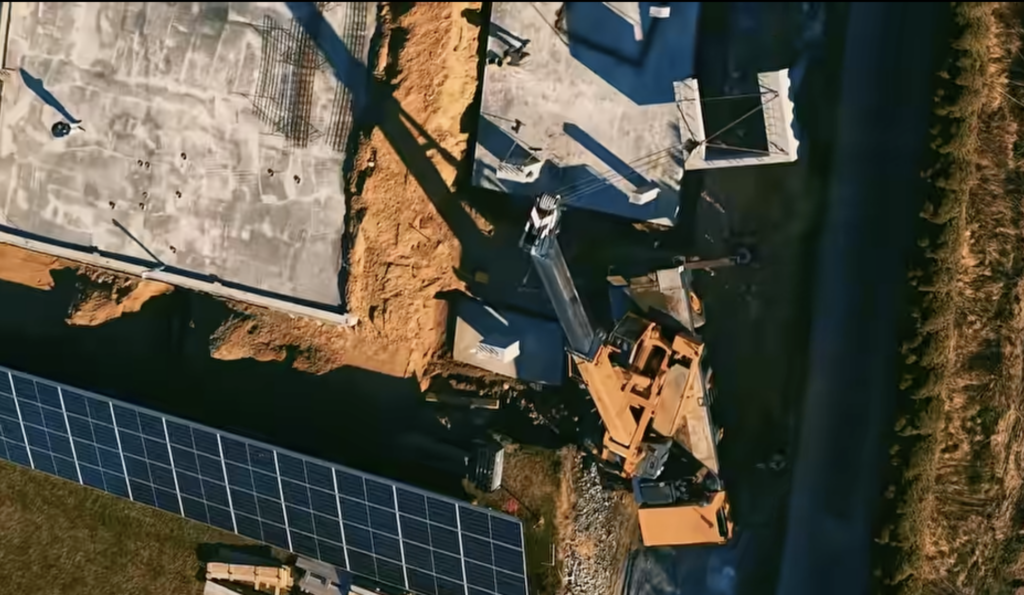
The construction of a steel hall is a process where most of the attention is focused on the spectacular above-ground structure – trusses, bracing, or modern cladding with sandwich panels. However, what determines the durability, safety, and stability of the entire facility is hidden deep in the ground. A correctly designed and executed foundation for a steel hall is simultaneously the basis (literally and figuratively) for the success of any industrial investment. Errors made at this stage can lead to uneven settlement, structural cracks, and in extreme cases, even building collapses.
Law and standards: Eurocode 7 as an azimuth
Geotechnical design is currently based on stringent European standards, specifically Eurocode 7 (EN 1997). This standard has abandoned traditional global safety factors in favour of the limit state method. In practice, this means that the designer must verify two key aspects:
– Ultimate Limit State (ULS), so that the foundation is not destroyed,
– and Serviceability Limit State (SLS), so that the settlement of the object does not exceed permissible norms (usually up to 50 mm for industrial buildings).
An absolute requirement, which cannot be overlooked, is to conduct professional soil investigations. Geotechnical boreholes allow for the determination of the ground's load-bearing capacity, layer structure, and groundwater level. Without reliable geotechnical documentation, it is impossible to prepare a safe foundation design, which may expose the investor to enormous costs associated with the necessity of subsequent ground reinforcement.
Types of foundations – pad, strip or slab?
The choice of foundation method depends on two factors: forces transferred by the structure and soil parameters.
Footings (point foundations): This is the most popular and cost-effective solution for frame structure halls. Each steel column is mounted on a separate footing – a rectangular concrete block that distributes normal forces, shear forces, and bending moments into the ground.
Slab foundation A recommended solution for soils with low load-bearing capacity, in areas affected by mining damage, or with a high groundwater table. The slab distributes the weight of the structure over its entire surface, minimising the risk of uneven settlement. Importantly, by constructing the slab, the investor simultaneously gains a ready foundation and a sub-base for the industrial floor, which speeds up the work.
Indirect foundation (piles and micropiles) Used in extreme situations where load-bearing soil layers are several or even a dozen metres underground. This requires specialised equipment and generates the highest costs.
Key technical parameters: frost and water
One of the most important technical requirements is the foundation being laid below frost penetration depth. In Poland, depending on the region, this zone ranges from 0.8 m to 1.4 m (1.0 m is often conventionally assumed). This helps to avoid so-called frost heave, which could deform the structure.
Protection against dampness is equally important. Foundations must be resistant to groundwater by using concrete of a high watertightness class (from W8 to W12) and surface insulation (bitumen compounds, roofing felt, PVC foils). Proper waterproofing protects not only the concrete but, most importantly, the steel bases of the columns against corrosion.
How to avoid costly mistakes?
A solid foundation is an investment in peace of mind. The most important principles for an investor are:
- Never give up on soil testing – these determine safety.
Ensure precise anchoring The hall pillars must match the foundation with millimetre accuracy.
Choose proven solutions – MatBud constructions are hot-dip galvanised As standard, which combined with a good foundation guarantees durability for decades.
Innovative „multi-track” investments with MatBud
In the traditional hall construction model, the investor waits for the design, then for the permit, and finally for the production of the structure. At MatBud, we propose an alternative approach. Thanks to the fact that, in addition to modular custom-made steel halls, we also have ready-made steel constructions (500 tons in stock, available immediately), the process can proceed in parallel.
When purchasing a ready-made structure, the investor receives a full package for the price. static and strength calculations. This is key information for the foundation designer – they don't have to wait for the hall's frame to be completed, as they receive ready-made load data. This allows the foundations to be designed and constructed faster, and the investor avoids the risk of steel price increases by securing the materials from the outset.
If you're planning construction, check out our Configurator. This will allow you to estimate the investment framework in a few minutes, select dimensions (e.g. 15m, 18m or 22m width) and obtain an initial quote that will be a solid starting point for discussions about foundations and assembly.
FAQ
To wcześniej przygotowane elementy konstrukcyjne hali, które znajdują się już w magazynie producenta i mogą zostać szybko przeznaczone do realizacji konkretnej inwestycji. Pozwala to ograniczyć czas oczekiwania związany z produkcją konstrukcji od podstaw.
Yes. We offer modular steel structures available Off the shelf, designed for self-assembly. We supply a complete set of components along with documentation and instructions, allowing a local contractor to carry out the assembly.
Czy gotowa konstrukcja stalowa może być dopasowana do potrzeb inwestora?
Tak. Dostępne konstrukcje mogą stanowić bazę do stworzenia hali o określonym przeznaczeniu, np. magazynowym, produkcyjnym czy rolniczym. Kluczowe jest odpowiednie dopasowanie parametrów konstrukcji do wymiarów obiektu, lokalizacji oraz planowanego sposobu użytkowania.
Jakie są największe zalety gotowej konstrukcji stalowej?
Największą korzyścią jest skrócenie procesu inwestycyjnego. Inwestor nie musi czekać na pełny cykl produkcji elementów stalowych, a dodatkowo może wcześniej zabezpieczyć konstrukcję przed zmianami cen materiałów i szybciej przejść do kolejnych etapów realizacji.
Dla kogo gotowa hala stalowa będzie dobrym rozwiązaniem?
To rozwiązanie szczególnie korzystne dla firm i gospodarstw, którym zależy na szybkim zwiększeniu powierzchni magazynowej, produkcyjnej lub użytkowej. Sprawdzi się zwłaszcza wtedy, gdy czas rozpoczęcia inwestycji ma duże znaczenie biznesowe.